Milan has a reputation problem. Fashion capital, financial hub, a bit corporate — yes, Upper East Side energy, I said it. But write it off as a style-obsessed business town and you will miss one of the most spiritually rich, historically layered, genuinely magical cities in Europe. I lived here. I know.
This is not your average Milan travel guide. This is Milan for the seeker — the curious soul who wants to walk where Da Vinci walked, stand in an underground church built over a Roman forum, and find out why the oldest Tarot decks in the world originated here. That Milan. Let’s go.
Why Milan, Why Now
With the 2026 Winter Olympics bringing the world to this northern Italian powerhouse, there has never been a better moment to get ahead of the crowds and discover what Milan has actually been hiding. Spoiler: it’s a lot.
The Spiritual Sites (Yes, Really)
The Underground Church Da Vinci Called the True Center of Milan
Cripta di San Sepolcro is an underground church founded in 1030, built over a 4th-century Roman forum. If that alone doesn’t get you curious, consider this: Leonardo da Vinci called it the true center of Milan. It reopened in 2016 — recent by European standards, lol — and it is largely unexplored by tourists. Sacred, historic, and off the radar. That’s our trifecta, no?
Building over existing spiritual sites was common practice — a way to both claim territory and harness the energy already present in a place. You’ll notice this pattern throughout Milan if you start looking.
(More info: abbonamentomusei.it)
The Duomo: More Than You Think
You’ve heard of the Duomo. Go. But here’s what most people don’t know: beneath it lies a 4th-century archaeological area housing the Battistero di San Giovanni alle Fonti — described as the first baptistery with a font and octagonal building in all of Christendom. An eight-sided building connected to Jesus? Notable.
There is also a Holy Nail at the Duomo, said to be from the cross of Jesus Christ. Once a year — for 40 hours every September — it is brought out for veneration. This tradition has continued for nearly 500 years. Plan ahead if this calls to you.
Also within the Duomo complex: the Basilica di Santa Tecla, established in 350 AD. I know. Lots of old stuff that no one talks about is just up our alley. Quite the spot.
The Optical Illusion Church
Santa Maria presso San Satiro is a sacred space that will genuinely stop you in your tracks. Architect Bramante created an optical illusion inside this church that makes the space appear far deeper than it actually is. (Gotta love these Italian talents!)Sacred spaces are ones that hold magic — and this artist made that happen in stone. Don’t miss it.
The Knights Templar Were Here
Milan was a key location for the Knights Templar, with sites scattered throughout the city. Among them: San Bevignate, the Cripta di San Sepolcro (yes, again — it’s that important), Santa Maria all’Aventino, and Abbazia di Chiaravalle just outside the city. If the Templar thread interests you, Milan will keep you busy. (There are tours but none that I have personally done so can’t recommend. Do share what you find!)
Tarot Was Born Here
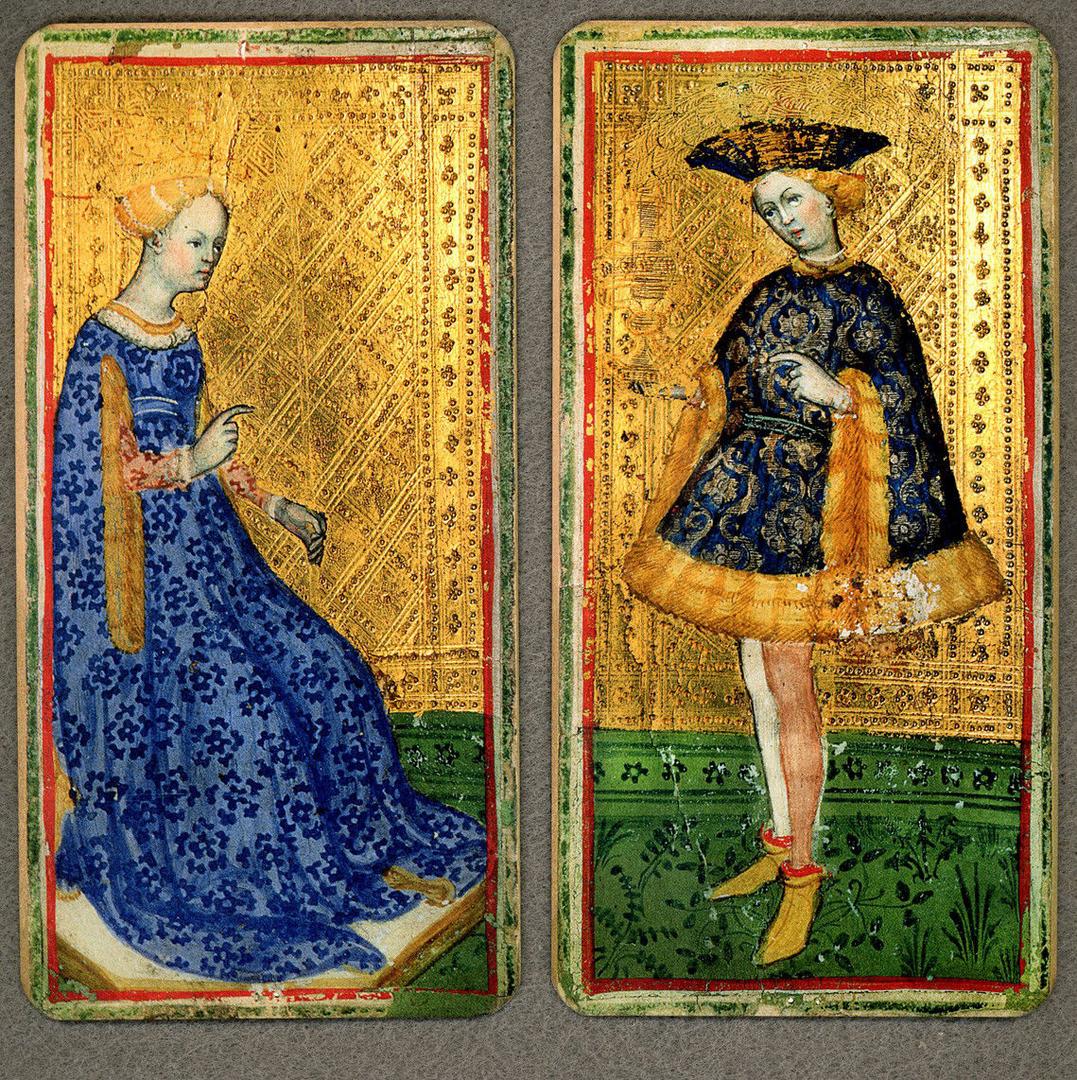
This is the one that gets people. The oldest Tarot decks in the world — the Visconti-Sforza decks — originated in Milan. The powerful Sforza family, who dominated this city for centuries and famously brought Da Vinci here (where he made some amazing sites you may not know about til visiting Milan), commissioned some of the earliest known Tarot cards. Yep, Milanese did that.
Where to see them:
- Pinacoteca di Brera: home to the historic Brambilla deck and the Sola Busca deck
- Accademia Carrara in Bergamo (a short, charming train ride away): houses another part of the main Visconti-Sforza deck
Tarot lovers, this is a pilgrimage worth making. In fact, if you are a fan it’s a must do.
The Last Supper (Yes, It’s a Spiritual Site)
I will die on this hill: The Last Supper by Da Vinci is absolutely a spiritual site. The man was a Magi and when you are in the space you will be shocked. Book your tickets well in advance — this is not negotiable — and stand in front of it with that in mind. You’re welcome.
The Codex Atlanticus
At Milan’s Biblioteca Ambrosiana lives one of Da Vinci’s most extraordinary creations: the Codex Atlanticus, the largest bound collection of his writings and drawings in existence. Compiled between 1478 and 1519, it covers every subject imaginable — science, technology, art, engineering — from a man who wrote backwards, learned by observing the world, and was centuries ahead of his time. To me, this document is a wand. To be near it is something.
Like, you can stand near where the legend created a document that is historic for so many disciplines. Yesss!
The Neighborhoods Worth Your Time
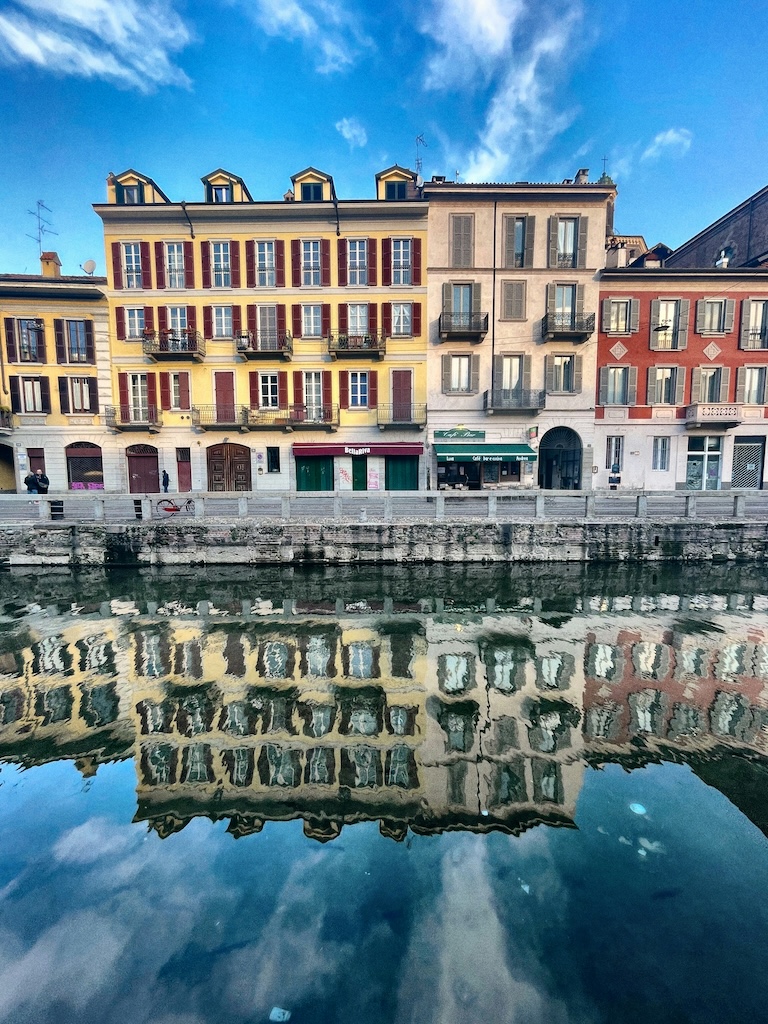
The Navigli: Da Vinci’s Canals
Everyone talks about Milan being landlocked. What they don’t tell you is that Da Vinci had something to say about that. When commissioned by the king, he designed a canal system for the city — and the Navigli neighborhood is the result. Stone bridges, galleries, charming shops, and a canal-side atmosphere that will genuinely melt your heart.
I know, I had no idea til I got there either.
People say Milan isn’t a very Italian city. Those people have not spent an afternoon in the Navigli followed by dinner along the water at night, with Da Vinci-designed ambiance all around them. Like what?
The Brera: Chic, Charming, and Very Much the Italy You’re Looking For
The Brera neighborhood is an afternoon well spent — boutique shops (negozi), legendary restaurants, and the most charming streets in the city. It is also home to my favorite museum in Milan.
Pinacoteca di Brera (in the Palazzo Brera) is a collection of paintings in a space that feels quintessentially Milanese — not some overwhelming behemoth, but intimate, elegant, and rich. Go here.
The Castello Sforzesco
The Sforza family ruled Milan for generations and left behind one of its most magnificent landmarks. The Castello Sforzesco is a wonder to visit — and it houses something that stopped me completely.
The Rondanini Pietà by Michelangelo. His final work. He worked on it for the last twelve years of his life, until just days before he died. It is raw, unfinished, transcendent. It made me cry. I have never cried in front of a statue before or since. It is a wonder to behold — and reason alone to come to Milan.
Eat, Drink, Shop
Gelato: Have it. Everywhere. Every day. Non-negotiable. Hot tip: get the green apple flavor if you find it. Life-changing.
Bar Magenta: A personal favorite — chic location near the main sites, local crowd, relaxed energy. A real bar in a city that can lean corporate. This is where you exhale.
Rinascente: The classic Milanese department store, just steps from the Duomo. A must even for a browse — clothes, housewares, gifts. I bought my all-time favorite mug here in college and I am still not over it.
Fiorucci: An Italian cultural classic and a Milan original. Whimsical, fun, playful — great for gifts and a reminder that Italians do play better than almost anyone.
Before You Go
Milan rewards the curious. The preconceived notions — corporate, cold, all fashion and no soul — are simply wrong. This is a city where Da Vinci designed the canals, where Tarot was born, where Michelangelo’s last breath went into an unfinished Pietà. Where underground churches sit beneath everyday streets and Knights Templar left their marks on the walls.
Go looking for that Milan. It’s all there.
Bisous, Mes Stars. 💫 — Leah
Energy exchange is real. If this piece moved you, or you value independent journalism with heart, you can buy me a coffee, shop the store, subscribe to my Patreon, or join La 29th Club when it opens next month. Bisous.

Wants to know. Has some questions. Very Sag. Always up for pizza. Planning several trips. Big fan of joy. Wants to talk about it. All of them. Is sure we can figure out this whole living thing. Is rooting for you.

